Hypnosis for Migraines
Stop losing days to the dark room. Address the triggers that medication can't touch.
Another migraine. Another day in a dark room, waiting for the throbbing to subside. You've tried the medications, the trigger diaries, the elimination diets – so why do they keep coming back?
I help people break the migraine cycle—through hypnotherapy that addresses the stress triggers and nervous system patterns medication can't touch.
Are You Hypnotizable?
Find out in 60 seconds
Hypnotizability Assessment
Adapted from the Stanford & Tellegen clinical scales
When reading a book or watching a movie, do you get so absorbed you lose track of time?
Here's something most migraine treatments won't tell you: the problem isn't just the pain. It's that you're trying to manage a complex neurological condition using only medication, while ignoring the triggers that keep setting it off.
Migraines aren't random. They're your nervous system responding to triggers—and many of those triggers are stress-related. Your body tenses, your blood vessels dilate, your brain becomes hypersensitive, and before you know it, you're in the dark room again. Medication manages the symptom. Hypnotherapy addresses the trigger.
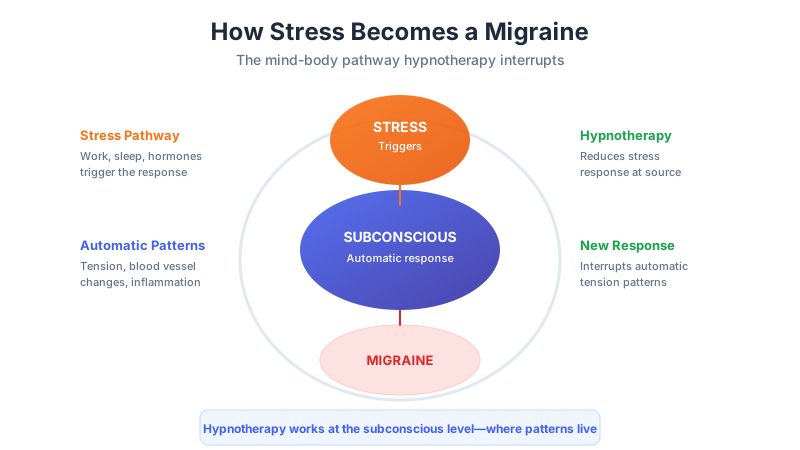
Hypnosis for migraines is a therapeutic approach that uses guided relaxation and focused attention to address the subconscious stress responses and nervous system patterns that trigger migraine attacks. Unlike medication that manages symptoms, hypnotherapy addresses the root causes of your migraines – including stress triggers, muscle tension patterns, and the automatic responses that start the cascade.
Currently accepting 4 new weight loss clients per month
Next available: February 11th
At Miami Hypnotherapy Center, I've worked with chronic migraine sufferers who've tried everything – preventives, triptans, Botox, nerve blocks. They don't lack medical care. They lack access to the stress patterns that keep triggering their attacks.
What This Guide Covers
- Why migraines are more than “just headaches”
- What clinical research shows about hypnotherapy for migraines
- What happens during a migraine hypnotherapy session
- Home remedies and self-help techniques
- Who hypnotherapy works best for
- Why medication alone often falls short
Understanding Your Migraines
The typical narrative is “it's just a headache, take some aspirin.” This completely misunderstands what a migraine actually is. Migraines are a neurological condition – not just a severe headache.
Think about your last migraine. Did you consciously choose to tense your shoulders? To clench your jaw? To have your nervous system spiral into an attack? Of course not. These are automatic responses – your nervous system reacting to triggers before your conscious mind even registers them.
The Four Phases of a Migraine
Migraines unfold in phases, and understanding this is key to treating them:
- Prodrome (hours to days before): Subtle warning signs like mood changes, food cravings, neck stiffness, increased thirst, or frequent yawning.
- Aura (optional, 5-60 minutes): Visual disturbances like flashing lights, zigzag lines, or blind spots. Not everyone experiences aura.
- Headache phase (4-72 hours): Throbbing, often one-sided pain, sensitivity to light and sound, nausea, vomiting.
- Postdrome (“migraine hangover”): Fatigue, confusion, weakness that can last a day or more.
Most treatments only target the headache phase. Hypnotherapy works on the triggers that start the whole cascade – and builds skills you can use during the prodrome to potentially prevent an attack.
Migraines are the leading cause of disability in people under 50 – ranked first among young women.
Source: Global Burden of Disease Study, The Lancet
This is why medication alone often fails. You're treating the symptom while the underlying stress patterns, muscle tension, and nervous system hyperactivity keep firing.
Hypnotherapy creates what I call a “pattern interrupt.” During a hypnotic state, your mind becomes highly receptive to new responses. Instead of automatically tensing and triggering, you can actually change how your nervous system responds to stress in the first place.
Learn more about how hypnotherapy works →
Types of Headaches and What They Mean
Not all headaches are migraines, and understanding your headache type helps determine the best approach.
Tension Headaches
Dull, pressing pain like a band around your head. Often triggered by stress, poor posture, or muscle tension. Hypnotherapy is highly effective for tension headaches.
Location: Both sides, forehead, temples, back of headMigraines
Throbbing, pulsing pain often on one side. May include aura, nausea, light/sound sensitivity. Usually lasts 4-72 hours.
Location: Often one-sided, can switch sidesCluster Headaches
Severe, piercing pain around one eye. Come in “clusters” – multiple attacks daily for weeks, then remission.
Location: Behind or around one eyeSore Head on Top
Pain at the top of your head can indicate tension headaches, stress, poor sleep, or sometimes sinus issues.
Location: Crown of head, vertexWhat the Research Actually Says
The typical narrative around hypnotherapy for migraines goes something like this: “There's not enough evidence.” This surface-level dismissal misses what the clinical research actually shows.
Research published in the International Journal of Clinical and Experimental Hypnosis found that hypnotherapy significantly reduces migraine frequency, duration, and intensity. Multiple studies show patients reducing or eliminating medication use after treatment.
Studies show relaxation-based interventions including hypnosis can reduce tension headache and migraine frequency by 40-50%.
Source: Anderson, Basker, & Dalton (1975); Melis et al. (1991)
That's not just fewer headaches – it's fewer days lost to the dark room, fewer medications needed, fewer disruptions to your life.
Key Research Findings
- Reduced frequency: Patients experience significantly fewer migraine days per month
- Decreased intensity: When attacks do occur, they're often less severe
- Shorter duration: Attacks resolve faster when self-hypnosis techniques are used at onset
- Medication reduction: Many patients reduce or eliminate preventive and acute medications
- Quality of life: Less fear and anticipation of the next attack
A systematic review found that hypnotherapy was particularly effective for tension-type headaches and stress-triggered migraines – exactly the cases where the stress-trigger connection is strongest.
“Hypnosis appears to be effective in the management of headaches... the available research suggests that hypnosis is a promising treatment.”
What Actually Happens in a Session
During a migraine hypnotherapy session, you'll enter a deeply relaxed but focused state where I guide you through techniques designed to reduce nervous system reactivity and change your automatic responses to triggers.
I should address what Hollywood got wrong first. You're not unconscious. You can't be made to cluck like a chicken or reveal your deepest secrets. You remember everything. You're in control throughout.
Hypnosis feels similar to that drifty state just before falling asleep – you're aware of everything around you, but deeply relaxed and focused. Most clients describe it as pleasant, almost meditative.
Trigger Exploration
We map your migraine patterns: when they hit, what precedes them, physical sensations, stress connections. This informs everything that follows.
Deep Relaxation
I guide you into a relaxed state using breathing techniques and progressive relaxation. Your nervous system begins to calm, creating space for change.
Pattern Reprogramming
This is where change happens. I introduce new responses to your triggers – teaching your nervous system to stay calm instead of escalating to a migraine.
Self-Hypnosis Tools
You learn techniques to use at home – especially during the prodrome phase. Catching a migraine early and applying self-hypnosis can abort an attack.
“I was skeptical. I'm not a 'woo-woo' person. But by session 4, my migraines dropped from weekly to maybe once a month. It's been 6 months and I've only had 3 migraines total.”
How Many Sessions You Need
Most clients see meaningful reduction in migraine frequency within 4-6 hypnotherapy sessions, with optimal results typically achieved through 8-12 sessions over 2-3 months.
I call this “stacking” – each session builds on the last, reinforcing new patterns and deepening your ability to self-regulate. You're not looking for one magic session; you're rewiring responses that took years to form.
| Sessions | What Happens | Your Experience |
|---|---|---|
| 1-2 | Trigger mapping + initial relaxation training | You start noticing tension patterns and early warning signs |
| 3-4 | Deep pattern work + self-hypnosis practice | Migraines may start spacing out or feeling less intense |
| 5-6 | Reinforcement + abort techniques | You catch prodrome signs and can sometimes prevent attacks |
| 7-12 | Long-term reprogramming | New patterns become automatic; maintenance phase begins |
Home Remedies That Actually Help
While hypnotherapy addresses the root causes, these evidence-based strategies can complement your treatment and provide relief:
🎯 Trigger Identification
Keep a headache diary. Track sleep, stress, foods, weather, hormones. Patterns emerge over time. Common triggers: alcohol, aged cheese, skipped meals, poor sleep, stress, bright lights.
😴 Sleep Hygiene
Both too little AND too much sleep can trigger migraines. Aim for consistent sleep/wake times, even on weekends. The regularity matters as much as the hours.
💧 Hydration
Dehydration is a common trigger. Aim for 8+ glasses of water daily. Coffee and alcohol don't count – they can actually dehydrate you.
🧊 Temperature Therapy
Cold packs on the forehead/temples, warm compress on the neck. Some people prefer one over the other – experiment to see what works for you.
🧘 Self-Hypnosis
Once learned, you can use self-hypnosis during the prodrome phase to potentially abort an attack. This is one of the most powerful home tools – and I teach it in our sessions.
🌿 Magnesium
Research supports magnesium supplementation for migraine prevention. Talk to your doctor about appropriate dosing – it's one of the better-evidenced supplements.
Learn more about self-hypnosis for migraine prevention →
Ready to work together?
Three ways to get started. Find the option that fits you best.
See Your Options →Is This Actually for You?
Hypnotherapy for migraines works best for people who have tried medications and understand their triggers – but struggle with stress-related attacks, tension patterns, or breaking the cycle.
The Ideal Candidates
If any of these resonate, you're likely a good fit:
Who Might Need Something Different
If after 30 days you don't notice a genuine shift in your migraine pattern — even a small one — I'll refund everything. No awkward conversation. No guilt. Just a refund.
See Your Options →“But Can I Actually Be Hypnotized?”
This is the question I get more than any other. And I get it – you've probably seen stage hypnosis and thought “that would never work on me.”
Here's the truth: if you can daydream, you can be hypnotized. That's it. Hypnosis isn't some mystical state that only “suggestible” people can access. It's a natural brain state you enter multiple times a day – when you're absorbed in a movie, driving on autopilot, or lost in thought.
What the Research Shows About Hypnotizability
85% of people respond well to hypnotherapy. The other 15%? We figure that out in the first session – no wasted time or money.
The people who struggle with hypnosis aren't “strong-minded” or “too smart.” They're usually just trying too hard. Hypnosis requires letting go, not fighting for control. If you can relax and follow along, you can be hypnotized.
Why Traditional Treatments Fall Short
Traditional migraine treatment focuses on medication – pain relief during attacks (triptans, NSAIDs) or preventives to reduce frequency (beta-blockers, anticonvulsants, Botox). For many people, this works well enough. But for others, medication alone isn't cutting it.
The Medication Limitations
Rebound headaches are a cruel irony of migraine treatment. Overusing pain medication can actually cause more headaches. Your brain becomes dependent, and when the medication wears off, the headache returns – sometimes worse than before.
- Side effects: Preventive medications often come with fatigue, weight gain, cognitive fog, or other issues
- Incomplete relief: Many patients still experience significant migraine days despite medication
- Doesn't address triggers: Medication manages symptoms but leaves the underlying patterns intact
- Not addressing the stress component: If stress is a major trigger, medication alone won't solve that
Clients who've tried hypnotherapy after years of medication often describe it the same way: “I'm not walking on eggshells anymore, waiting for the next attack. I finally feel like I have some control.”
Finding a Qualified Hypnotherapist
When choosing a hypnotherapist for migraines, look for clinical training, specific experience with pain conditions, and an approach that combines hypnosis with evidence-based techniques. Note: With virtual sessions now standard, you're not limited to practitioners in your city.
What to Look For
Red Flags to Avoid
At {siteConfig.brand.name}
ARCH-credentialed clinical hypnotherapist (RCH) · 100% virtual sessions
See Your Options →Frequently Asked Questions
Can hypnotherapy cure migraines?
Migraines are a neurological condition – “cure” isn't the right word. But hypnotherapy can significantly reduce frequency, intensity, and duration. Many clients go from weekly attacks to occasional ones.
How many sessions for migraines?
Most see meaningful improvement in 4-6 sessions. Optimal results come from 8-12 sessions over 2-3 months, which allows deep pattern work and self-hypnosis mastery.
Can I use hypnotherapy during a migraine?
Self-hypnosis works best in the prodrome phase (early warning signs). During a full attack, the focus is usually on rest and medication. But relaxation techniques can help manage pain.
Will it work for all headache types?
It's most effective for tension headaches and stress-triggered migraines. Cluster headaches respond less well. We'll discuss your specific patterns in the consultation.
Can I still take my medication?
Absolutely. Hypnotherapy works alongside medication, not instead of it. Many clients eventually reduce medication with their doctor's guidance, but that's never the starting point.
What does it cost?
Single sessions are $350. Most migraine clients benefit from a package of 6-12 sessions. Full pricing with options is shown below.
Key Takeaways
Based on clinical research and practiceReady to Try a Different Approach?
You've probably tried the pill-juggling game before. The preventives, the triptans, the Botox, the elimination diets. Some of it helped. Some didn't.
Here's the thing – if you keep treating only the symptom while ignoring the stress patterns that trigger attacks, you'll keep getting the same results.
Maybe it's time to address what's actually starting the cascade.
You deserve to live without the constant fear of the next attack.
— Danny
Ready to Work Together?
- Three ways to get started (see options below)
- From self-paced audio to full 1:1 programs
- Choose what fits your needs and budget
- 100% virtual sessions from anywhere
📅 Currently accepting 4 new pain management clients per month
Investment & Options
Choose the path that fits your needs
Cost Per Session Comparison
~$300/session for 6 personalized sessions
- 6-8 personalized sessions
- Custom to your triggers
- Direct support throughout
Best for complex cases or trauma-related eating
ApplyJust $37/session — same content, 10x less cost
- 6 full sessions (same content as 1:1)
- Self-paced, repeat anytime
- Lifetime access forever
30-day satisfaction guarantee. Not for you? Full refund.
$350 for one 45-min session
- One 45-min session
- No program structure
Just want to see what it's like
Inquire via Email
David Doyle
Probably the only credentialed fraud examiner for Fortune 100 companies turned Clinical Hypnotherapist on the planet. After 10+ years investigating high-profile corporate deception, Danny now applies that same ruthlessly analytical mindset to something more rewarding: helping people stop deceiving themselves. He specializes in anxiety, gut issues, and pain reduction, bringing a data-driven approach to a field that desperately needs it. When he's not helping clients rewire their subconscious, you'll find him at comedy improv. Reading people is a skill that works both ways.
Last updated: January 2026
Sources & References
- •Flynn N. (2018). Systematic review of the effectiveness of hypnosis for the management of headache. Int. J. Clin. Exp. Hypnosis. DOI
- •Anderson JA, Basker MA, Dalton R. (1975). Migraine and hypnotherapy. Int. J. Clin. Exp. Hypnosis.
- •Melis PM, et al. (1991). Treatment of chronic tension-type headache with hypnotherapy. Headache.
- •Global Burden of Disease Study. (2016). Migraine as leading cause of disability. The Lancet.