Hypnotherapy for Trauma: Why It's Different from Talk Therapy
Discover how hypnotherapy gently processes trauma, offering a unique path to healing beyond traditional talk therapy.
Trauma leaves an imprint not just on your mind, but on your nervous system. Sometimes, talking about it isn't enough to release its grip.
I help individuals gently process and integrate traumatic experiences using hypnotherapy, allowing for healing that goes beyond conscious conversation.
Can Hypnosis Help You Heal?
Understand your responsiveness to hypnotic techniques
Hypnotizability Assessment
Adapted from the Stanford & Tellegen clinical scales
When reading a book or watching a movie, do you get so absorbed you lose track of time?
When we experience trauma, our brains often respond by storing those memories differently. They can become "stuck" in a way that regular conscious recall and processing struggle to access. This isn't a failure on your part, but a natural protective mechanism.
Traditional talk therapy, while invaluable, primarily engages the conscious, analytical part of the brain. But trauma often resides deeper, in the emotional and somatic (body-based) centers of the brain and nervous system. This is where hypnotherapy for trauma offers a distinct advantage.
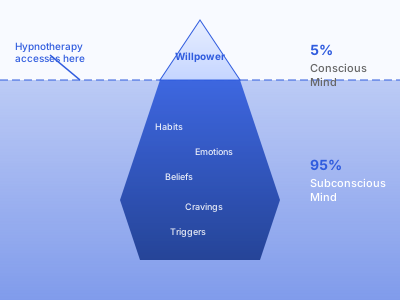
Illustration of the mind's structure, showing the smaller conscious mind and larger subconscious mind. Trauma often resides in the deeper subconscious layers.
Hypnotherapy creates a focused state of awareness where your mind becomes more receptive to suggestions and new ways of processing information. It allows for a gentler, indirect approach to traumatic memories, often reducing the risk of re-traumatization that can sometimes occur with direct conscious recall.
Currently accepting 4 new weight loss clients per month
Next available: February 11th
At Lumrah Lanyard, I've seen firsthand how profound healing can occur when we work with the subconscious mind. Clients often report feeling a sense of release and integration that was previously inaccessible.
What This Guide Covers
- The fundamental differences between hypnotherapy and talk therapy for trauma
- How hypnotherapy helps process and integrate traumatic memories gently
- What clinical evidence says about hypnosis for PTSD and trauma
- What a typical trauma-focused hypnotherapy session looks like
- How to integrate hypnotherapy with other healing modalities
- Key considerations when choosing a hypnotherapist for trauma
Talk Therapy vs. Hypnotherapy: A Different Path to Healing
Both talk therapy and hypnotherapy are powerful tools for healing trauma, but they engage different parts of our mental and emotional landscape. Understanding this distinction is key to choosing the right path or combining approaches for comprehensive healing.
The Conscious Approach of Talk Therapy
Talk therapy, such as Cognitive Behavioral Therapy (CBT) or Dialectical Behavior Therapy (DBT), often operates on a conscious level. It helps you:
- Identify and challenge negative thought patterns.
- Develop coping mechanisms for managing triggers.
- Gain insight into past experiences through verbal processing.
- Learn behavioral strategies to navigate daily life.
This is incredibly valuable for building resilience and managing symptoms. However, for some, the deepest emotional imprints of trauma, especially those stored somatically, can remain untouched by conscious conversation alone.
The Subconscious Pathway of Hypnotherapy
Hypnotherapy, particularly when trauma-informed, takes a different route. It utilizes a relaxed, focused state to access the subconscious mind, where trauma responses and memories are often deeply embedded. In this state, the mind is more open to new perspectives and less reactive to past triggers.
Instead of directly reliving or extensively discussing the trauma (which can be re-traumatizing for some), hypnotherapy can work with metaphorical language, guided imagery, and resource building to:
- Deregulate the nervous system, reducing hyperarousal and anxiety.
- Process difficult emotions without being overwhelmed.
- Integrate fragmented memories more gently.
- Build internal resources for safety and resilience.
Studies show hypnotherapy can lead to a substantial decrease in PTSD symptoms, often more rapidly than some other modalities.
Source: International Journal of Clinical and Experimental Hypnosis
Explore the science behind hypnotherapy →
How Hypnotherapy Processes Trauma Differently
The core difference lies in how hypnotherapy navigates the protective barriers the mind puts up around traumatic memories.
Bypassing the Critical Factor
Our conscious mind has a "critical factor" – a filter that evaluates incoming information based on our existing beliefs and experiences. When it comes to trauma, this critical factor can block access to deeply stored memories or resist new interpretations, making change difficult. Hypnosis temporarily lowers this critical factor, allowing for more direct communication with the subconscious.
Resource-Oriented Approach
Unlike some trauma therapies that might start by diving directly into the traumatic event, hypnotherapy often begins with building internal resources. This could involve strengthening feelings of safety, resilience, and inner wisdom within the hypnotic state. This prepares the individual to approach the trauma from a place of strength, rather than vulnerability.

Hypnotherapy guides a gentle, resource-filled journey through traumatic experiences, promoting integration rather than re-living.
Integration, Not Eradication
The goal isn't to erase traumatic memories, which is impossible. Instead, it's to integrate them into your life story in a way that no longer holds debilitating power over you. Hypnotherapy helps reframe the memory, reduce its emotional charge, and separate the past event from your present experience. This can lead to a profound sense of peace and freedom.
Patients often report a greater sense of agency and control over their emotional responses to triggers after hypnotherapy for trauma.
What the Research Says About Hypnosis for Trauma
While often misunderstood, hypnotherapy has a growing body of evidence supporting its efficacy in treating trauma and PTSD. It's recognized by organizations like the American Psychological Association as a legitimate therapeutic modality.
A meta-analysis published in the Journal of Consulting and Clinical Psychology (Lynn et al., 2012) found that:
- Hypnosis significantly enhanced the effects of cognitive-behavioral treatments for a range of conditions, including PTSD.
- It led to greater reductions in anxiety and depression associated with trauma.
“Hypnosis offers a unique, potent, and nonpharmacological method for treating individuals suffering from trauma-related disorders.”
Furthermore, research has shown that trauma-focused hypnotherapy can be particularly effective in reducing symptoms of dissociation and improving emotional regulation in individuals with complex trauma. The ability to access the subconscious allows for processing aspects of trauma that are often out of conscious awareness.
Ready to explore a different path to healing?
Connect with Me →What to Expect in a Trauma Hypnotherapy Session
A trauma-focused hypnotherapy session is a collaborative and gentle process, designed to create a safe space for healing. It does not involve "mind control" or forcing you to relive distressing events.
Typically, a session will involve:
Preparation & Resource Building
We begin by ensuring you feel safe and comfortable. The focus is on building internal resources like a "safe place" visualization or strengthening your sense of inner resilience, ensuring you are grounded before any deeper work.
Gentle Induction
I guide you into a relaxed, focused state, similar to deep meditation. You remain aware and in control, simply more open to inner experience.
Subconscious Processing
Here, we may use techniques like guided imagery, metaphorical exploration, or ego-state therapy to process the trauma indirectly, reducing its emotional intensity and integrating the experience. The aim is to create new, healthier associations.
Integration & Awakening
The insights gained are integrated, and you are gently guided back to full conscious awareness, often feeling a profound sense of calm, clarity, and inner peace.
“I've done years of therapy, but nothing helped me feel this calm around my past. It's like the memory is still there, but the pain is gone.”
Complement, Not Replacement: Integrating Approaches for Holistic Healing
It's crucial to understand that hypnotherapy for trauma is not a replacement for traditional talk therapy, especially for complex or severe trauma. Instead, it serves as a powerful complementary modality.
Many clients achieve the most comprehensive and lasting healing by integrating hypnotherapy with ongoing psychotherapy. Hypnotherapy can accelerate progress by addressing subconscious barriers, while talk therapy provides cognitive restructuring, coping skills, and conscious processing.

The synergy of talk therapy and hypnotherapy can lead to profound, holistic healing for trauma.
Always discuss your complete treatment plan with all your care providers to ensure a coordinated and effective approach to your well-being.
Ready to add hypnotherapy to your healing toolkit?
Book a Consultation →Is Trauma Hypnotherapy Right for You?
Trauma-informed hypnotherapy can be a powerful avenue for healing for many, but it's important to consider if it aligns with your current needs and readiness.
You Might Benefit If...
These scenarios suggest hypnotherapy could be helpful:
Consider Other Options If...
My trauma-informed approach prioritizes creating a safe, supportive, and empowering environment for your healing journey. Your comfort and agency are paramount.
Book a Free Consultation →Finding a Qualified Trauma Hypnotherapist
When seeking a hypnotherapist for trauma, it's vital to choose someone with specific training and a trauma-informed approach. This ensures a safe and effective healing process.
Key Qualities to Look For
Red Flags to Be Aware Of
Ready to find lasting peace from trauma?
- 15 minutes, no obligation
- Discuss your specific situation
- Get honest answers about whether this fits
- Virtual or in-person in Calgary
📅 Currently accepting 4 new weight loss clients per month