I Was a Hypnotherapy Skeptic. Here's What Changed My Mind.
From dismissive to deeply convinced: my personal journey from skepticism to understanding the profound, evidence-based power of hypnosis.
"I thought hypnosis was a stage trick, a parlor game for the gullible. I was wrong. The science is undeniable."
Like many, I approached hypnotherapy with a healthy dose of skepticism. My background as a fraud examiner taught me to question everything. But what I discovered wasn't illusion; it was a powerful, evidence-backed tool for profound change.
Curious About Your Own Mind?
Take a quick quiz to find out your hypnotizability.
Hypnotizability Assessment
Adapted from the Stanford & Tellegen clinical scales
When reading a book or watching a movie, do you get so absorbed you lose track of time?
Before diving into the brain imaging studies and the "why," let me be clear: my skepticism was deep-seated. I'd seen too many fads, too many empty promises, and too many people taken advantage of by pseudo-science. Hypnosis, to me, felt like it belonged in that category.
This isn't just about my personal opinion, though. It's about a shift in understanding that came from looking at the evidence with an open mind, and then experiencing it firsthand.
What You'll Discover
- My personal journey from deep skepticism to conviction
- The compelling brain science behind hypnosis
- Why smart, rational people often dismiss it (and why they shouldn't)
- How to approach hypnotherapy for genuine, lasting change
My Journey from Doubter to Believer
For years, my view of hypnotherapy was shaped by what I saw on TV: swinging watches, people clucking like chickens, and seemingly losing all control. As a rational, analytical mind, it screamed "fake" to me. I dismissed it as entertainment, not legitimate therapy.
My job as a fraud examiner trained me to look for patterns of deception, to dig beneath the surface. And what I initially saw of hypnosis fit neatly into my mental category of "things to be wary of." I assumed it was either outright trickery or a placebo effect for those desperate enough to believe.
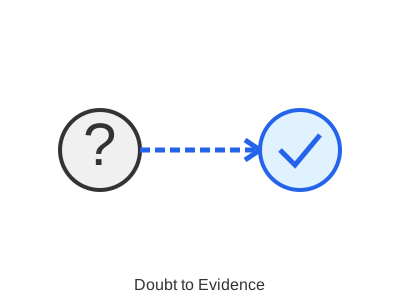
This all changed when I began researching alternative therapies out of personal interest and a growing dissatisfaction with conventional approaches for certain issues. I stumbled upon academic papers, not pop psychology articles, detailing the use of hypnosis in clinical settings. The language was different: "altered states of consciousness," "focused attention," "subconscious reprogramming." It sounded less like magic and more like neuroscience.
Initially skeptical or misinformed about clinical hypnosis, believing it to be a form of mind control or stage performance.
Source: Public perception surveys, psychological literature
Still, it was hard to shake the ingrained skepticism. I decided the only way to truly understand was to experience it myself. And that's when my worldview began to shift profoundly.
The Brain Science That Changed My Mind
What truly turned me from a skeptic into a staunch advocate was the mounting body of scientific evidence, particularly from brain imaging studies (fMRI, EEG) conducted at institutions like Stanford and Harvard. These studies moved hypnosis out of the realm of speculation and into verifiable biological reality.
What Brain Scans Reveal
During a hypnotic state, specific changes occur in brain activity and connectivity. Key findings include:
- Decreased activity in the dorsal anterior cingulate cortex (dACC): This area is associated with self-monitoring and cognitive control. Reduced activity here means less 'self-consciousness' and more openness to suggestion.
- Increased connectivity between the dorsolateral prefrontal cortex (dlPFC) and the insula: The dlPFC is involved in executive control, while the insula processes bodily sensations and emotions. Increased connection allows the brain to better control how the body perceives and responds to stimuli – like pain or cravings.
- Reduced functional connectivity between the dlPFC and the default mode network (DMN): The DMN is active when your mind wanders or you're self-reflecting. Less connectivity means a reduction in rumination and distraction, allowing for deeper focus.
In simpler terms, hypnosis creates a unique brain state where your mind is highly focused, less distracted by internal chatter, and more receptive to positive suggestions that align with your goals. It's not about being "controlled," but about empowering your own mind to make desired changes more easily.
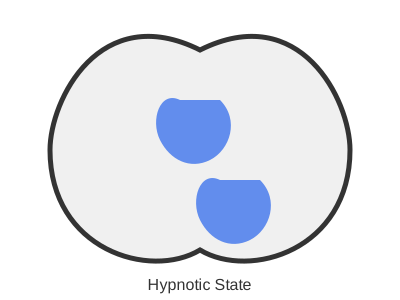
These objective, measurable changes in brain function were the undeniable evidence I needed. Hypnosis wasn't just 'believing it works'; it was a quantifiable shift in neural processing that facilitates profound therapeutic outcomes. This scientific grounding fundamentally altered my perception.
Why Even Smart People Dismiss Hypnosis (And Why They're Wrong)
It's common for intelligent, rational individuals to dismiss hypnotherapy. I know, because I was one of them. The reasons are often understandable:
1. The "Stage Hypnosis" Stigma
Popular media's portrayal of stage hypnosis has done a tremendous disservice to clinical hypnotherapy. People associate it with losing control, public embarrassment, and manipulation – none of which are true in a therapeutic setting. Stage hypnotists select highly suggestible individuals and use social pressure; clinical hypnotherapy is a collaborative, empowering process.
2. Misunderstanding of "Control"
The fear of losing control is a major barrier. In reality, you are always in control during hypnotherapy. You can hear everything, remember everything (unless you choose not to), and can open your eyes or end the session at any time. It's a state of heightened awareness, not unconsciousness.
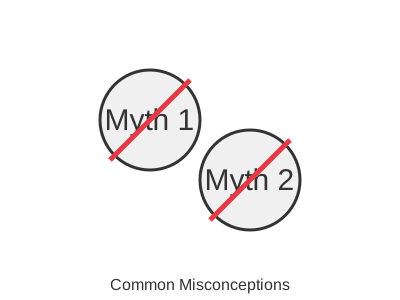
3. Lack of Education on Modern Research
Many people, including some medical professionals, simply haven't been exposed to the rigorous scientific studies on hypnosis in the last few decades. They rely on outdated information or anecdotal evidence, rather than peer-reviewed research on its efficacy for pain management, anxiety, PTSD, and habit change.
Believe hypnosis is 'mind control' or 'magic' rather than a legitimate therapeutic technique, largely due to media portrayal.
Source: Gallup Polls, academic reviews of public perception
My analytical background initially led me down the same path of dismissal. But once I moved beyond the stereotypes and looked at the actual data – the fMRI scans, the meta-analyses, the controlled clinical trials – the picture became clear. Hypnosis is a powerful, natural state of mind that, when guided ethically and skillfully, can facilitate profound therapeutic change. It's not magic; it's neuroscience and psychology working in harmony.
Currently accepting 4 new weight loss clients per month
Next available: February 11th
My Personal Transformation & What It Means for You
Experiencing hypnotherapy myself, combined with understanding the scientific basis, was a revelation. It wasn't about being told what to do; it was about connecting with a deeper part of my mind, identifying old patterns, and gently guiding them towards new, healthier responses.
I found it incredibly effective for managing stress, improving focus, and even shifting long-held limiting beliefs that I didn't even realize were holding me back. The changes were subtle at first, then profound. It felt less like a "cure" and more like an accelerated process of self-discovery and empowerment.
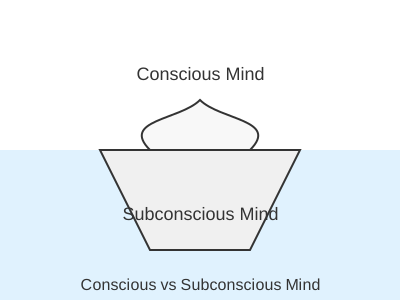
What this means for you, whether you're a skeptic like I was or simply curious, is that the potential for change is real. If you're struggling with anxiety, unwanted habits, or chronic stress, and conventional methods haven't yielded the lasting results you desire, hypnotherapy offers a compelling, evidence-backed alternative.
It's about working with your subconscious, the powerful engine behind your conscious mind, to create lasting shifts. It's not about giving up control; it's about taking a different kind of control – one that aligns your deepest intentions with your daily actions.
Ready to explore what's possible?
Discover how aligning your subconscious mind can lead to profound, lasting change.
Start Your Journey →If after 3 sessions you don't feel a genuine shift, we stop. No pressure. No upsell.
Learn More →Frequently Asked Questions: Addressing Your Doubts
Is hypnosis real or fake?
Hypnosis is scientifically real and measurable. Brain imaging studies show distinct changes in brain activity during a hypnotic state, demonstrating it's a genuine neurological phenomenon, not a trick or a fake.
Does hypnosis work for everyone?
While most people (around 85%) are hypnotizable to some degree, the depth of trance and individual receptivity vary. Success largely depends on a genuine desire for change, openness to the process, and the skill of the therapist.
Can I be made to do something against my will?
Absolutely not. In clinical hypnotherapy, you remain fully aware and in control. Hypnosis cannot force you to act against your values or desires. It's a collaborative process where you guide the changes you want to make.
Is hypnotherapy safe?
Yes, hypnotherapy is a safe and non-invasive therapeutic technique. It has no known negative side effects when practiced by a qualified and ethical practitioner.
How many sessions are typically needed?
While a single session can initiate change, lasting transformation for complex issues often benefits from a series of 3-6 sessions. This allows for deeper subconscious reprogramming and reinforcement of new patterns.
What does hypnotherapy feel like?
It's often described as a state of deep relaxation, similar to the feeling just before falling asleep or waking up. You remain aware of your surroundings but are deeply focused internally, experiencing a sense of calm and heightened suggestibility.
Key Insights for the Curious Skeptic
Based on cutting-edge research and clinical experience
Ready to Experience the Shift?
If my journey from deep skepticism to a profound understanding of hypnotherapy resonates with you, then perhaps it's time to explore what it can do for your own life.
Whether you're looking to overcome anxiety, break unwanted habits, or unlock your full potential, the scientific evidence and countless personal transformations speak for themselves.
You don't need to believe in magic, just be open to the undeniable power of your own mind.
— {siteConfig.brand.practitioner.name}
Ready to Work Together?
- Personalized 1:1 sessions, virtual from anywhere
- Focus on measurable, lasting change
- Address root causes, not just symptoms
- Empower your subconscious for breakthroughs
📅 Currently accepting a limited number of new clients per month.
Investment & Options
Choose the path that fits your needs
Cost Per Session Comparison
~$300/session for 6 personalized sessions
- 6-8 personalized sessions
- Custom to your triggers
- Direct support throughout
Best for complex cases or trauma-related eating
ApplyJust $37/session — same content, 10x less cost
- 6 full sessions (same content as 1:1)
- Self-paced, repeat anytime
- Lifetime access forever
30-day satisfaction guarantee. Not for you? Full refund.
$350 for one 45-min session
- One 45-min session
- No program structure
Just want to see what it's like
Inquire via Email
{siteConfig.brand.practitioner.name}
Probably the only credentialed fraud examiner for Fortune 100 companies turned Clinical Hypnotherapist on the planet. After 10+ years investigating high-profile corporate deception, Danny now applies that same ruthlessly analytical mindset to something more rewarding: helping people stop deceiving themselves. He specializes in anxiety, gut issues, and pain reduction, bringing a data-driven approach to a field that desperately needs it. When he's not helping clients rewire their subconscious, you'll find him at comedy improv. Reading people is a skill that works both ways.
Last updated: February 2026
Sources & References
- •Jiang, H., et al. (2017). Brain Activity and Connectivity During Hypnosis: A Systematic Review. Frontiers in Psychology. Frontiers in Psychology
- •Spiegel, D., et al. (2016). Brain activity during hypnosis: Stanford study identifies changes. News Center - Stanford Medicine. Stanford Medicine
- •McGeown, W. J., et al. (2015). The Neural Correlates of Hypnosis. Cerebral Cortex. PubMed
- •Oakley, D. A. (2008). Hypnosis and brain imaging. The British Journal of Psychiatry. PubMed