Weight Loss Through Hypnotherapy
Discover how hypnotherapy nearly doubles weight loss results. Willpower was never the problem.
Diet after diet. Gym membership after gym membership. You know what to eat, you know you should exercise – so why isn't it working?
I help people stop fighting themselves around food—through hypnotherapy that changes how your brain responds to cravings.
Are You Hypnotizable?
Find out in 60 seconds
Hypnotizability Assessment
Adapted from the Stanford & Tellegen clinical scales
When reading a book or watching a movie, do you get so absorbed you lose track of time?
Here's something most weight loss programs won't tell you: the problem isn't your willpower. It's that you're trying to change behavior using only 5% of your mind, while ignoring the 95% that actually drives your decisions.
There's an old saying among hypnotherapists: “The conscious mind is the goal-setter, the subconscious is the goal-getter.” It sounds simple enough. But here's the problem – most people spend their entire lives fighting food battles with their goal-setter, while the goal-getter keeps sabotaging them from behind the scenes.
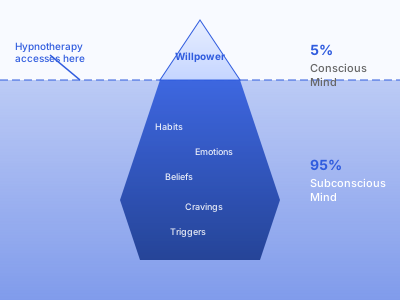
Weight loss through hypnotherapy is a therapeutic approach that uses guided relaxation and focused attention to access the subconscious mind, where eating habits, food associations, and self-sabotaging patterns are stored. Unlike traditional diets that rely on willpower alone, hypnotherapy addresses the psychological root causes of overeating – including emotional eating, stress-related cravings, and deeply ingrained beliefs about food.
Currently accepting 4 new weight loss clients per month
Next available: February 11th
At Miami Hypnotherapy Center, I've worked with many clients who've tried everything – keto, intermittent fasting, Weight Watchers, you name it. They don't lack information about nutrition. They lack access to the part of their brain that actually controls their relationship with food.
What This Guide Covers
- How hypnotherapy changes your brain's relationship with food
- What clinical research shows about success rates
- What happens during a hypnotherapy session
- How many sessions you need
- Who hypnotherapy works best for
- How to find a qualified hypnotherapist
The Goal-Setter vs. The Goal-Getter
Hypnotherapy works for weight loss by accessing the subconscious mind – where 95% of your decisions are made – and reprogramming the automatic thoughts and emotional triggers that drive overeating.
Think about the last time you ate something you “shouldn't have.” Did you make a conscious, deliberate choice? Or did you find yourself in front of the refrigerator, hand already reaching for the ice cream, before your conscious mind even caught up?
That automatic response is your subconscious running the show. And here's the challenge: your conscious mind can tell you to eat salad all day long, but your subconscious – the goal-getter – doesn't respond to logic. It responds to emotion, association, and repetition.
This is why willpower fails. You're essentially trying to outmuscle a part of your brain that never gets tired.
Hypnotherapy creates what I call the “subconscious rewrite.” During a hypnotic state, your mind becomes highly receptive to new suggestions and associations. Instead of fighting cravings with willpower, you can actually change how your brain responds to food triggers in the first place.
Nearly 7 in 10 participants eliminated emotional eating patterns after hypnotherapy.
Source: HYPNODIET Trial, American Journal of Clinical Nutrition
The next time you find yourself reaching for food when you're not hungry, pause and notice what you're actually feeling. Stress? Boredom? A vague discomfort you can't name? That automatic response is exactly what hypnotherapy helps rewire.
Learn more about how hypnotherapy works →
What the Research Actually Says
The typical narrative around weight loss hypnotherapy goes something like this: “It might help, but there's not much evidence.” Well, this kind of surface-level dismissal misses decades of clinical research.
Let me share what the studies actually show.
In a meta-analysis examining weight loss outcomes, participants using hypnotherapy lost an average of 11.83 lbs compared to 6 lbs for those using conventional methods alone. That's nearly double the results from adding hypnosis to the same diet and exercise program.
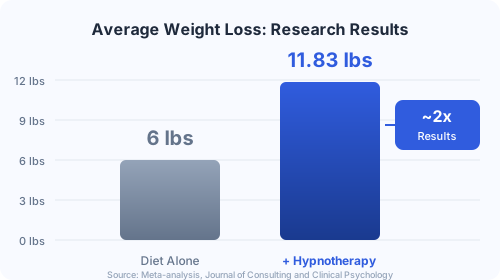
Hypnotherapy participants lost more weight than 70% of non-hypnosis participants and maintained results at long-term follow-up.
That last part is worth sitting with. Most diets work in the short term. The research shows hypnotherapy works in the long term.
A 2020 clinical study from Turkey found that after just 10 weeks of hypnotherapy, participants' BMI decreased from 33.43 to 31.45 – with corresponding improvements in metabolic markers like leptin and irisin. These aren't just behavioral changes; they're measurable physiological shifts.
“Hypnotherapy and self-hypnosis can significantly improve the deep mechanisms of eating behaviors and seem to have a beneficial effect on weight loss.”
What the research shows is that hypnotherapy makes the behavioral changes you already know you need to make significantly easier to stick with. And that's worth far more than another crash diet.
What Actually Happens in a Session
During a weight loss hypnotherapy session, you'll enter a deeply relaxed but focused state where your hypnotherapist guides you through visualizations and suggestions designed to change your automatic responses to food.
I should address what Hollywood got wrong first. You're not unconscious. You can't be made to cluck like a chicken or reveal your deepest secrets. You remember everything. You're in control throughout.
Hypnosis feels similar to that drifty state just before falling asleep – you're aware of everything around you, but deeply relaxed and focused. Most clients describe it as pleasant, almost meditative.
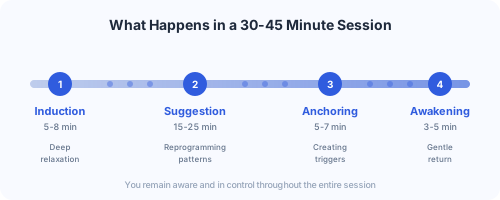
The Induction
I guide you into a relaxed state using breathing techniques and progressive relaxation. Your body settles, your mind quiets, and you shift into a more receptive mode.
The Suggestion Phase
This is where the actual work happens. I introduce suggestions tailored to your specific challenges, building new associations between stress and healthier responses.
Anchoring
We create mental triggers (anchors) you can use in daily life. A breath pattern to pause before eating, or a visualization when cravings hit.
The Awakening
You're gently guided back to normal awareness. Most people feel refreshed, calm, and oddly energized. Like waking from a restorative nap.
“I was skeptical. I'm not a 'woo-woo' person. But by session 3, I stopped craving chips entirely. It's been 8 months.”
The “Stacking” Effect: How Many Sessions You Need
Most clients see meaningful shifts in their eating patterns within 4-6 hypnotherapy sessions, with optimal results typically achieved through 8-12 sessions over 2-3 months.
I call this “stacking” – each session builds on the last, layering suggestions that compound over time. You're not looking for one magic session; you're rewiring patterns that took years to form.
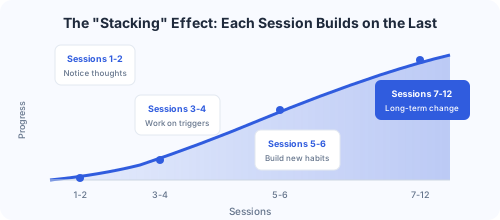
| Sessions | What Happens | Your Experience |
|---|---|---|
| 1-2 | Assessment + initial suggestions | You start noticing automatic thoughts about food |
| 3-4 | Deep work on triggers | Cravings begin to feel less urgent |
| 5-6 | Reinforcement + visualization | Healthy choices feel more natural |
| 7-12 | Long-term programming | New patterns become automatic |
The research backs this up. A 2022 Malaysian study found that participants who frequently practiced self-hypnosis between sessions lost -6.27% of their body weight – nearly double the control group's -3.04%.
Ready to work together?
Three ways to get started. Find the option that fits you best.
See Your Options →Is This Actually for You?
Hypnotherapy for weight loss works best for people who have tried diets before and understand what they “should” do – but struggle with emotional eating, self-sabotage, or breaking automatic habits.
The Ideal Candidates
If any of these resonate, you're likely a good fit:
Who Might Need Something Different
If after 30 days you don't notice a genuine shift — even a small one — I'll refund everything. No awkward conversation. No guilt. Just a refund.
See Your Options →“But Can I Actually Be Hypnotized?”
This is the question I get more than any other. And I get it – you've probably seen stage hypnosis and thought “that would never work on me.”
Here's the truth: if you can daydream, you can be hypnotized. That's it. Hypnosis isn't some mystical state that only “suggestible” people can access. It's a natural brain state you enter multiple times a day – when you're absorbed in a movie, driving on autopilot, or lost in thought.
What the Research Shows About Hypnotizability
85% of people respond well to hypnotherapy. The other 15%? We figure that out in the first session – no wasted time or money.
The people who struggle with hypnosis aren't “strong-minded” or “too smart.” They're usually just trying too hard. Hypnosis requires letting go, not fighting for control. If you can relax and follow along, you can be hypnotized.
Why Traditional Diets Fail (And Keep Failing)
Traditional diets fail because they target conscious behavior while ignoring the subconscious patterns that drive 95% of your daily decisions about food.
The typical narrative around weight loss is “eat less, move more, try harder.” This kind of thinking ignores how the brain actually works.
The Willpower Problem
Willpower is a finite resource. Research shows it depletes throughout the day – which is why you're more likely to make poor food choices at night than in the morning. You're not weak; you're just running on empty.
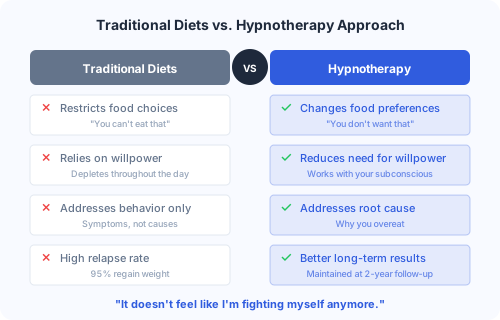
The clients who've tried hypnotherapy after years of dieting often describe it the same way: “It doesn't feel like I'm fighting myself anymore.”
Finding a Qualified Hypnotherapist
When choosing a hypnotherapist for weight loss, look for clinical training, specific experience with weight issues, and an approach that combines hypnosis with evidence-based behavioral techniques. Note: With virtual sessions now standard, you're not limited to practitioners in your city.
What to Look For
Red Flags to Avoid
At {siteConfig.brand.name}
ARCH-credentialed clinical hypnotherapist (RCH) · 100% virtual sessions
See Your Options →Frequently Asked Questions
Does it actually work?
Yes. Research shows hypnotherapy nearly doubles weight loss results (11.83 lbs vs 6 lbs) and maintains results better at 2-year follow-up.
How many sessions?
Most see meaningful changes within 4-6 sessions. Optimal results typically come from 8-12 sessions over 2-3 months.
Emotional eating?
Yes, this is one of hypnotherapy's strongest applications. 67.7% of participants eliminated emotional eating patterns.
Is it safe?
Yes. Hypnotherapy is non-invasive with no side effects. You remain aware and in control throughout every session.
What does it cost?
Most clients start with the Audio Program at $220 (6 sessions, self-paced). Full 1:1 programs start at $1,800+ for personalized sessions. Single sessions are $350.
Will I be asleep?
No. You remain awake and aware. Hypnosis is focused attention, not unconsciousness. You'll hear and remember everything.
Ready to Try a Different Approach?
You've probably tried the willpower game before. The diets, the tracking, the guilt when you “fail.”
Here's the thing – if you keep fighting the same battle with the same 5% of your mind, you'll keep getting the same results.
Maybe it's time to recruit the 95% that's been running the show all along.
You deserve to feel at peace with food.
— Danny
Ready to Work Together?
- Three ways to get started (see options below)
- From self-paced audio ($220) to full 1:1 programs
- Choose what fits your needs and budget
- 100% virtual sessions from anywhere
📅 Currently accepting 4 new weight loss clients per month
Investment & Options
Choose the path that fits your needs
Cost Per Session Comparison
~$300/session for 6 personalized sessions
- 6-8 personalized sessions
- Custom to your triggers
- Direct support throughout
Best for complex cases or trauma-related eating
ApplyJust $37/session — same content, 10x less cost
- 6 full sessions (same content as 1:1)
- Self-paced, repeat anytime
- Lifetime access forever
30-day satisfaction guarantee. Not for you? Full refund.
$350 for one 45-min session
- One 45-min session
- No program structure
Just want to see what it's like
Inquire via Email
David Doyle
Probably the only credentialed fraud examiner for Fortune 100 companies turned Clinical Hypnotherapist on the planet. After 10+ years investigating high-profile corporate deception, Danny now applies that same ruthlessly analytical mindset to something more rewarding: helping people stop deceiving themselves. He specializes in anxiety, gut issues, and pain reduction, bringing a data-driven approach to a field that desperately needs it. When he's not helping clients rewire their subconscious, you'll find him at comedy improv. Reading people is a skill that works both ways.
Last updated: January 2026
Sources & References
- •Kirsch I. (1996). Hypnotic enhancement of cognitive-behavioral weight loss treatments. Journal of Consulting and Clinical Psychology. PubMed
- •HYPNODIET Trial (2022). American Journal of Clinical Nutrition. AJCN
- •Iyiköşker İP, et al. (2020). Effects of hypnotherapy on weight loss and metabolic markers. PubMed
- •Ng QX, et al. (2022). Self-hypnosis for weight management. PubMed